quinta-feira, 23 de março de 2023

Dr. Mike Yeadon: "Why I don’t believe there ever was a Covid virus"


Dr Mike Yeadon
March 22, 2023

I’VE grown increasingly frustrated about the way debate is controlled around the topic of origins of the alleged novel virus, SARS-CoV-2, and I have come to disbelieve it’s ever been in circulation, causing massive scale illness and death. Concerningly, almost no one will entertain this possibility, despite the fact that molecular biology is the easiest discipline in which to cheat. That’s because you really cannot do it without computers, and sequencing requires complex algorithms and, importantly, assumptions. Tweaking algorithms and assumptions, you can hugely alter the conclusions.

This raises the question of why there is such an emphasis on the media storm around Fauci, Wuhan and a possible lab escape. After all, the ‘perpetrators’ have significant control over the media. There’s no independent journalism at present. It is not as though they need to embarrass the establishment.  I put it to readers that they’ve chosen to do so.

So who do I mean by ‘they’ and ‘the perpetrators?  There are a number of candidates competing for this position, with their drug company accomplices, several of whom are named in Paula Jardine’s excellent five-part series for TCW, Anatomy of the sinister Covid project. High on the list is the ‘enabling’ World Economic Forum and their many political acolytes including Justin Trudeau and Jacinda Ardern.

But that doesn’t answer the question why are they focusing on the genesis of the virus. In my view, they are doing their darnedest to make sure you regard this event exactly as they want you to. Specifically, that there was a novel virus.

I’m not alone in believing that myself at the beginning of the ‘pandemic’, but over time I’ve seen sufficient evidence to cast strong doubt on that idea. Additionally, when considered as part of a global coup d’état, I have put myself in the position of the most senior, hidden perpetrators. In a Q&A, they would learn that the effect of a released novel pathogen couldn’t be predicted accurately. It might burn out rapidly. Or it might turn out to be quite a lot more lethal than they’d expected, demolishing advanced civilisations. Those top decision-makers would, I submit, conclude that this natural risk is intolerable to them. They crave total control, and the wide range of possible outcomes from a deliberate release militates against this plan of action: ‘No, we’re not going to do this. Come back with a plan with very much reduced uncertainty on outcomes.’

The alternative I think they’ve used is to add one more lie to the tall stack of lies which has surrounded this entire affair. This lie is that there has ever been in circulation a novel respiratory virus which, crucially, caused massive-scale illness and deaths. In fact, there hasn’t.

Instead, we have been told there was this frightening, novel pathogen and ramped up the stress-inducing fear porn to 11, and held it there. This fits with cheating about genetic sequences, PCR test protocols (probes, primers, amplification and annealing conditions, cycles), ignoring contaminating genetic materials from not only human and claimed viral sources, but also bacterial and fungal sources. Why for example did they need to insert the sampling sticks right into our sinuses? Was it to maximise non-human genetic sequences?

Notice the soft evidence that our political and cultural leaders, including the late Queen, were happy to meet and greet one another without testing, masking or social distancing. They had no fear. In the scenario above, a few people would have known there was no new hazard in their environment. If there really was a lethal pathogen stalking the land, I don’t believe they’d have had the courage or the need to act nonchalantly and risk exposure to the virus.

Most convincingly for me is the US all-cause mortality (ACM) data by state, sex, age and date of occurrence, as analysed by Denis Rancourt and colleagues. The pattern of increased ACM is inconsistent with the presence of a novel respiratory virus as the main cause.

If I’m correct that there was no novel virus, what a genius move it was to pretend there was! Now they want you only to consider how this ‘killer virus’ got into the human population. Was it a natural emergence (you know, a wild bat bit a pangolin and this ended up being sold at a wet market in Wuhan) or was it hubristically created by a Chinese researcher, enabled along the way by a researcher at the University of North Carolina funded by Fauci, together making an end run around a presidential pause on such work? Then there’s the question as to whether the arrival of the virus in the general public was down to carelessness and a lab leak, or did someone deliberately spread it?

I also need to point out that the perpetrators have hermetic control of the mass media via a Big Tech and government stranglehold documented in part here, here and hereThat’s why they’ve found it so easy to censor people like me. If a story appears on multiple TV networks, it’s because they’re either OK with it or it has been actively planted. It won’t be genuine. They never tell the truth. I don’t think they’ve told the truth since this coup began and probably much earlier. Most so-called journalists have lost sight of what truth ever was.

I believe that the perpetrators (who could be all or any of Gates, Fauci, Farrar, Vallance, CEPI, EcoHealth Alliance, DARPA and numerous others) planted the controversy about the origins of SARS-CoV-2  because a little embarrassment of the establishment was a small price to persuade most of us that there surely must be a novel virus when there isn’t. (And they have got away with it to date.) 

I have colleagues who do not believe what we’ve been told (i.e. that a virus has been experimentally constructed) is even possible technologically. I don’t have the background to assess that idea. But the rest hangs together for me in a way that no other explanation does.

To this point, an ex-pharmaceutical industry executive Sasha Latypova, speaking with Robert F Kennedy Jr on his podcast of last Thursday, March 16, describes the extensive evidence of the contracts and relationships that were in place before the Covid era. Contracts were signed for billions of dollars in February 2020. Not only would the required production never happen (from a standing start, to sign such a large commitment is ridiculous) but it cannot be done. She estimated that approximately one kilogram of DNA was required. There isn’t that much medicinal grade DNA on the planet at any one time. That’s because it’s hard to do, very expensive, wholly bespoke and difficult to store for long periods. Also, the amounts of any specific DNA sequence required and held in store by commercial suppliers would be milligrams or perhaps grams at a stretch. So it was always completely unfeasible, regardless of how much money was thrown at the problem, to have accomplished what they claim to have done in a short time.

Consequently, no other conclusion is supported by the facts than that it’s a huge crime, extensively planned. In itself, that rules out a natural emergence of a pathogen, unless divine providence occurred. Logically we’re left with a leak or, as I argue, a lie plus a PsyOp. The former may or may not be possible, but what isn’t arguable is that something like this could be done and would be likely to run smoothly, with a real pathogen. Almost any outcome but the one presumably wanted is likely if a pathogen is released. I can reach no other conclusion than that it’s fake. 

In closing, I’m not saying people weren’t sick or that they didn’t die in huge numbers. I’m arguing only about the causes of illnesses and deaths. People were made sick and some killed by all the pre-existing causes, amplified by fear, resulting in immunosuppression and then a host of revolting actions. Note even the official overlap of signs and symptoms of ‘Covid-19’ and existing illnesses. Notably, they chopped antibiotic prescriptions in the US by 50 per cent during 2020. They ensured large numbers of frail elderly people were mechanically ventilated, a procedure which, in such subjects, is close to contraindicated. Some were administered remdesivir, which is a poison for the kidneys. In care homes, they were given midazolam and morphine, respiratory depressant drugs which in combination are all but contraindicated in patients with breathing difficulties. If used, close monitoring is required, most usually automated alarm systems attached to vital cardiorespiratory monitoring, including fingertip monitoring for blood gases. That didn’t happen in care homes.

I believe the main reason for the lies about the novel virus is a desire for total predictability and control, with the clearly articulated intention of transforming society; beginning by dismantling the financial system through lockdowns and furlough, while the immediate practical goal of lockdown was to provide the causus belli for injecting as many people as possible with materials designed not to induce immunity, but to demand repeat inoculation, to cause injury and death, and to control freedom of movement. I’m sure they’re pretty content with getting at least one needle into 6,000,000,000 people.

Note that though an estimated 10-15 million have been killed with poisonous ‘vaccines’, these are the but first of many mRNA injections to come. The indications are that ways to force you to accept ten more have been anticipated, because that’s the number of doses your government has agreed to purchase. Purchasing what? Well, it’s already been mooted that all existing vaccines are to be reformatted as mRNA types. If this happens, I don’t believe anyone injected ten more times is likely to escape death or severe, life-limiting illnesses. Inducing your body to manufacture non-self proteins will axiomatically induce an autoimmune attack by your own body. Your disease will be related to where the injected dose goes and of course the consistency of that injected product. They’ve been horribly erratic so far. It’s not certain they ever could have been made and launched if they had been subject to the usual quality requirements and not granted ’emergency use’ authorisations. Of course, as we now know, the regulators played an important role beyond lying for the US military, the organisation which made the original orders for ‘vaccines’, and set all the contractual conditions for companies such as Moderna and Pfizer.

The chickens are coming home to roost right now in the banking system.

As I always say, I cannot know much for sure. I don’t have a copy of the script of this, the greatest crime in history. But, whatever Covid actually is, I don’t believe that what was called influenza disappeared conveniently in early 2020. It’s another lie. It’s what they do. It’s all they do.

To those who sense that all is not well but are unwilling to make the psychological leap to the diabolical world I believe we’re now living in, I point out the asymmetry of risk. If you follow the official narrative and I’m right, you and your children will lose all your freedoms and probably your lives. If you believe what I’m saying and I’m wrong, you’ll be laughed at. These options aren’t faintly balanced. A rational actor should cease believing what we’re being told. It’s not a safe position, keeping your counsel and your head down. It’s the most dangerous thing you could do.

                                                             ***

Over 100,000 Brits Were Killed By Government Drug Protocols: 

Source: https://www.conservativewoman.co.uk/why-i-dont-believe-there-ever-was-a-covid-virus/

domingo, 19 de março de 2023

Hydrogel Coagulates Blood and Causes Blood Clots


Ana Maria Mihalcea, MD, PhD
February 14, 2023 

Many people do not see a problem using Hydrogels in injectable medications and C19 shots. Hydrogel is the technological platform to the transhumanist agenda, as it can create technological interfaces, mimic any tissue

People are completely surprised that C19 injected people are experiencing blood clotting problems.

In my view, unvaccinated people are not concerned enough about the fact that their D-Dimers are also increasing, indicating micro clotting.

We have been speaking about the fact that vaccinated and unvaccinated blood looks the same now, with what is believed to be Hydrogel/ Graphene Ribbons.

Dr. David Nixon showed these Ribbons to develop from the C19 Pfizer vial contents, and they seem to be the optical communications system between the microchips that unfold and enfold from the quantum field.

These same Hydrogel/ Graphene Ribbons are seen in live blood with clearly visible micro clotting. Some people have elevated D-Dimers, however the micro clotting is visible under Darkfield Microscopy prior to manifesting an abnormal D-Dimer test.

Hydrogel has long been used to stop bleeding and increase blood clotting.

The body is unable to control massive blood loss without treatment. Available hemostatic agents are often expensive, ineffective or raise safety concerns. Synthetic hydrogel particles are an inexpensive and promising alternative.

In this study we synthesized and characterized N-(3-aminopropyl)methacrylamide (APM) hydrogel particles and investigated their use as a hemostatic material. The APM hydrogel particles were synthesized via inverse suspension polymerization with a narrow size distribution and rapid swelling behavior.

In vitro coagulation studies showed hydrogel particle blood aggregate formation as well as bulk blood coagulation inhibition. In vivo studies using multiple rat injury and ovine liver laceration models demonstrated the particles’ ability to aid in rapid hemostasis

Subsequent hematoxylin and eosin and Carstairs’ method staining of the ovine liver incision sites showed significant hemostatic plug formation. This study suggests that these cationic hydrogel particles form a physical barrier to blood loss by forming aggregates, while causing a general decrease in coagulation activity in the bulk.

The formation of a rapid sealant through aggregation and the promotion of local hemostasis through electrostatic interactions are coupled with a decrease in overall coagulation activity. These interactions require the interplay of a variety of mechanisms stemming from a simple synthetic platform.

Here is the link:

Blood-aggregating hydrogel particles for use as a hemostatic agent

The exact opposite, creating blood thinning, has also been done with Hydrogel. Any part of the blood clotting mechanism can be controlled via Hydrogel:

Bio-responsive polymer architectures can empower medical therapies by engaging molecular feedback-response mechanisms resembling the homeostatic adaptation of living tissues to varying environmental constraints.

Here we show that a blood coagulation-responsive hydrogel system can deliver heparin in amounts triggered by the environmental levels of thrombin, the key enzyme of the coagulation cascade, which–in turn–becomes inactivated due to released heparin.

The bio-responsive hydrogel quantitatively quenches blood coagulation over several hours in the presence of pro-coagulant stimuli and during repeated incubation with fresh, non-anticoagulated blood.

These features enable the introduced material to provide sustainable, autoregulated anticoagulation, addressing a key challenge of many medical therapies. Beyond that, the explored concept may facilitate the development of materials that allow the effective and controlled application of drugs and biomolecules.

Hydrogels that are used to stop bleeding have tremendous mechanical resistance capability. For example, for surgical repair it can withstand a pressure of 290mmHg ( I have never seen a human with such a blood pressure).


Uncontrollable bleeding is a major problem in surgical procedures and after major trauma. Existing hemostatic agents poorly control hemorrhaging from traumatic arterial and cardiac wounds because of their weak adhesion to wet and mobile tissues.

Here we design a photoreactive adhesive that mimics the extracellular matrix (ECM) composition. This biomacromolecule-based matrix hydrogel can undergo rapid gelling and fixation to adhere and seal bleeding arteries and cardiac walls after UV light irradiation.

These repairs can withstand up to 290 mm Hg blood pressure, significantly higher than blood pressures in most clinical settings (systolic BP 60–160 mm Hg). Most importantly, the hydrogel can stop highpressure bleeding from pig carotid arteries with 4~ 5 mm-long incision wounds and from pig hearts with 6 mm diameter cardiac penetration holes. 

Treated pigs survived after hemostatic treatments with this hydrogel, which is well-tolerated and appears to offer significant clinical advantage as a traumatic wound sealant.

We all know that the Hydrogel in the C19 shots is Polyethylene Glycol. It is quite effective in clotting the blood.


TetraStat is a tetra-armed polyethylene glycol (PEG) hydrogel. It is a synthetic sealant that solidifies instantly in response to pH changes. This study aimed to evaluate the hemostatic effect of TetraStat through experiments evaluating future clinical applications.

We used TetraStat, oxidized regenerated cellulose (SURGICEL®), and fibrinogen and thrombin sealant patch (TachoSil®) using in vitro and in vivo experiments. For the in vitro experiment, a closed circulatory system filled with phosphate-buffered saline under high pressure was used.

Needle punctures were created and closed using the various sealants. For the in vivo experiment, rat venae cavae were punctured with 18- and 20-gauge (G) needles, and hemorrhage was allowed to occur for several seconds.

A porous PEG sponge soaked with TetraStat was applied as a hemostatic system. Hemostasis outcomes were compared among the various concentrations (40–100 g/L) of TetraStat, SURGICEL, and TachoSil.

The punctured holes in the prosthetic graft were successfully sealed with TetraStat in 1 min. The success rate of hemostasis with TetraStat for the punctured holes in the rat vena cava was dose-dependent.

TetraStat was effective in sealing the holes created with a 20 G needle at all concentrations; however, the holes created with an 18 G needle could be sealed only when the concentration ≥60 g/L. Hemostasis using SURGICEL or TachoSil was less successful and sometimes required up to 5 min.

Even for those who believe that the spike protein is the cause of the blood clots, I have not yet heard a good explanation to the fact that the spike protein sequence encodes for the pH dependent production of Hydrogel. At the body’s pH of 7 Hydrogel is produced, not Amyloid.

I wrote in my commentary about the “ Died Suddenly” Documentary that the clots found by the embalmers sure look like Hydrogel, and Mike Adams findings of self assembly polymer with metals makes this also very reasonable.

Unfortunately we were not able to find anyone to analyze these clots from an unvaccinated individual, but given that the Hydrogel/ Graphene structures are in unvaccinated blood as well now, it seems prudent to investigate this correlation further.

When I saw this finding in the sky over Turkey where the massive earthquake happened – incidentally while square HAARP clouds were over the area – it made me think of omens for humanity in the sky.

It looks like a deformed red blood cell to me, not a UFO. It made me wonder, if the cause of end of the human species was written prophetically in the heavens. In my view, the answer to unfolding human depopulation phenomenon is in the live blood.

All are affected now, thanks to self spreading vaccines, environmental poisoning and all experience silent accelerated aging, both vaccinated and unvaccinated. 


Maria Zeee interviews Dr. Ana Mihalcea:


Source: https://anamihalceamdphd.substack.com/p/hydrogel-coagulates-blood-and-causes?publication_id=956088&post_id=102116209&isFreemail=true


sábado, 18 de março de 2023

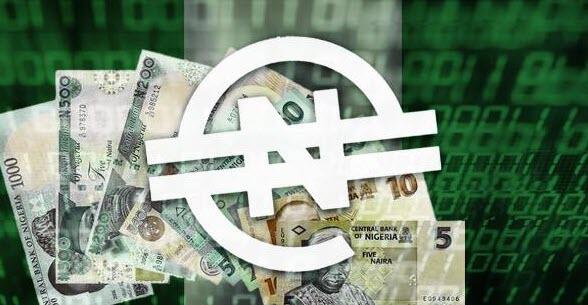
Nigerians Rebel Against Forced Elimination of Cash


Violent protests in Nigeria reveal that getting average people to embrace central bank digital currencies (CBDCs) might be more difficult than government officials would like.


Michael Maharrey via SchiffGold.com
March 9, 2023


Nigerians recently took to the streets to protest a cash shortage caused by government policies adopted in order to push the country into the adoption of its central bank digital currency (CBDC).

Protesters attacked bank ATMs and blocked streets, and demonstrations turned violent in some cities.

According to The Guardian“Nigeria has been struggling with a shortage in physical cash since the central bank began to swap old bills of the local naira currency for new ones, leading to a shortfall in banknotes.” According to reporting by the news outlet, the protests erupted when bank customers couldn’t access their cash or change old banknotes for new ones. Tensions ratcheted up when the government set a February deadline to change old notes.

The problem is there aren’t enough new banknotes to go around, and that appears to be on purpose. Bloomberg called the policy “demonetization.”

According to the Associated Press, the Central Bank of Nigeria introduced the redesigned notes last fall. The plan was to recover about 85% of the total currency in circulation outside the banking system. The Nigerian central bank said the policy was implemented to remove counterfeit currency from the system and to discourage cash ransom payments to kidnappers and other criminals. But there is an underlying reason for the new policy that The Guardian only mentions in passing.

The policy was also to promote cashless transactions by limiting the use of cash for businesses.”

The AP report also noted that the central bank said the policy would help “make digital payments the norm.”

What these corporate news outlets failed to report is that Central Bank of Nigeria Governor Godwin Emefiele said, “The destination, as far as I am concerned, is to achieve a 100% cashless economy in Nigeria.”

The issue isn’t just the banknote swap. In December, the central bank limited cash withdrawals to 100,000 naira (US$225) per week for individuals and 500,000 naira ($1,123) for businesses.


Thanks But No Thanks

That seems to be the basic attitude of Nigerians when it comes to the central bank’s digital currency.

CBDCs exist as virtual banknotes or “coins” held in a digital wallet on a computer or smartphone. The difference between a central bank (government) digital currency and peer-to-peer electronic cash such as bitcoin is that the value of the digital currency is backed and controlled by the government, just like traditional fiat currency.

The Central Bank of Nigeria launched its CBDC, called the eNaira, in the fall of 2021. Last October, Bloomberg reported that only about 0.5% of Nigerians had adopted the digital currency.

Ironically, about 50% of Nigerians use cryptocurrencies such as bitcoin. It’s not that they spurn digital currency. They just spurn the government’s digital currency.

Central Bank of Nigeria Deputy Governor Kingsley Obiora said people just need “a little push from the government,” and they will embrace the eNaira.

The government tried several schemes to incentivize the adoption of the CBDC, including offering a 5% discount to taxi drivers and passengers. It also lifted a restriction that required people to have a bank account in order to use the eNaira.

But with those soft approaches failing to achieve the desired results, the government turned to more coercive measures, including limiting bank withdraws and the currency switch – a policy that will effectively reduce the amount of cash in circulation.

War on Cash

Central bank digital currencies are part of a broader “war on cash.”

A cashless society is sold on the promise of providing a safe, convenient, and more secure alternative to physical cash. We’re also told it will help stop dangerous criminals who like the intractability of cash.

But there is a darker side – the promise of control.

The elimination of cash creates the potential for the government to track and even control consumer spending. Digital economies would also make it even easier for central banks to engage in manipulative monetary policies such as negative interest rates.

ER: And to tie your money to other nefarious policies such as mandatory vaccination!

Nigeria isn’t the only country experimenting with CBDCs. In fact, most countries are interested in eliminating cash. ChinaIndia, and the US have all launched pilot programs to test CBDCs.

Imagine if there was no cash. It would be impossible to hide even the smallest transaction from the government’s eyes. Something as simple as your morning trip to Starbucks wouldn’t be a secret from government officials. As Bloomberg put it in an article published when China launched a digital yuan pilot program in 2020, digital currency “offers China’s authorities a degree of control never possible with physical money.”

The government could even “turn off” an individual’s ability to make purchases. Bloomberg described just how much control a digital currency could give Chinese officials.

The PBOC has also indicated that it could put limits on the sizes of some transactions, or even require an appointment to make large ones. Some observers wonder whether payments could be linked to the emerging social-credit system, wherein citizens with exemplary behavior are ‘whitelisted’ for privileges, while those with criminal and other infractions find themselves left out. ‘China’s goal is not to make payments more convenient but to replace cash, so it can keep closer tabs on people than it already does,’ argues Aaron Brown, a crypto investor who writes for Bloomberg Opinion.”

Economist Thorsten Polleit outlined the potential for Big Brother-like government control with the advent of a digital euro in an article published by the Mises Wire. As he put it, “the path to becoming a surveillance state regime will accelerate considerably” if and when a digital currency is issued.

Coming to America

Last year, the Federal Reserve released a “discussion paper” examining the pros and cons of a potential US central bank digital dollar. According to the central bank’s website, there has been no decision on implementing a digital currency, but this pilot program reveals the idea is further along than most people realized.

Ultimately, it would take a congressional act to establish a digital dollar as legal tender.

US officials toyed with the possibility of a digital dollar at the height of the pandemic. A Democratic proposal for stimulus payments in the wake of the coronavirus pandemic featured digital currency deposited into digital wallets.

But Americans don’t seem to be any more interested in digital currency than Nigerians. When the Fed solicited comments on CBDCs, more than 66% of the 2,052 commenters were either concerned or completely opposed to the idea of a digital dollar. According to the Cato Institute, “The most common concerns were over financial privacy, financial oppression, and the risk of disintermediating the banking system.


Source: https://www.zerohedge.com/crypto/nigerians-not-eager-embrace-central-bank-digital-currency


sexta-feira, 17 de março de 2023

Mexican Senate shaken by vaccine-dissident testimony


FW comment: In spite of AMLO's declarations that "Mexico will not be held hostage by pharmaceutical companies" it is clear that the President's power is limited and that his country is - in many respects - very much in the hands of the pharmaceutical companies and the Great Reset agenda. AMLO's government has also introduced new bills that clearly signal an effort to bring digital surveillance and biometric technology to the country. A recent conference at the Mexican Senate, however, is breaking new ground for awareness of the vaccine democide, As an aside, the following commentary by Médicos Por La Verdad México is also indicative of Latin American clear understang of the no-virus argument, as well as its awareness of the evidence for nanotechnology in the vaccines. The second of these two achievements, of course, is largely due to the untiring work of Spains La Quinta Columna.

Claudio Fabián Guevara
March 1st

A keynote speech before the Mexican Senate exposed the fraudulent aspects of the pandemic, and the high number of adverse effects and deaths from Covid vaccines.

The conference "Pandemic and Vaccines" has shaken the Mexican Senate. On Tuesday, February 28, a magisterial conference was broadcast live before the Mexican Senate where the fraudulent aspects of the pandemic were exposed, alonng with the high number of adverse effects and deaths from Covid vaccines. Also
underlined were the tragic social consequences of the lockdowns and the null scientific support for the many countermeasures.

The event was hosted by Senator Rafael Espino de la Peña. Presenting it were Dr. Alejandro Díaz Villalobos, Dr. Roberto Malone and the
businessman and researcher Steve Kirsch.

Pandemic and Vaccines: the speech of Alejandro Díaz Villalobos

The first speaker was Dr. Alejandro Díaz Villalobos, pediatrician, allergist, immunologist and specialist in Functional & Integral Medicine. He gave a moderate critique, but:

did not deny the existence of a virus, nor its character as a pathogenic agent.

did not accuse the acting authorities of having deliberately caused harm.

did not mention the debate around the content of the vials (graphene? nanotechnology?).

[FW: the author might note that at least two of these critiques can be levelled against Malone and Kirsch]

However, he clearly distanced himself from the official narrative on Covid. Some of his points were as follows:

That the pandemic was "built" through statistical manipulation, as, when Covid began, the flu disappeared. And he described the propaganda operation as the largest in history.

That in Africa, with precarious public health systems and almost no vaccination, there was no increase in deaths. In contrast, in countries where mass vaccination was applied, there was an increase in mortality.
That there was a very high increase in spontaneous abortions and other disorders in pregnant women after the application of the Covid vaccine.

That there is a very high rate of deaths and severe adverse effects from Covid injections.
That Covid “vaccines” should be stopped. And that “the number of injuries and deaths far exceeds the number of injuries and deaths from all previous vaccines combined”

That we should respect natural immunity as the best protection.


Presentation by Steve Kirsch: "The deadliest vaccine in history."

After Dr. Díaz Villalobos, it was the turn of Steve Kirsch, businessman, philanthropist and environmentalist. Kirsch is a founder of the COVID-19 Early Treatment Fund (CETF) and the Vaccine Safety Research Foundation. Some points by Steve Kirsch before the Mexican Senate were as follows:

"Covid vaccination is the biggest disaster in medical history."

"Why are there confidentiality agreements and why isthe data is not made public?"

“The more you give people the vaccine, the more they get sick from Covid. And more people are getting sick from all causes. It's the exact opposite of what they said."

“The risk of death increases each month after getting the 'vaccine'. It is the deadliest vaccine in history.”


Master Conference: Pandemic and Vaccines (II)


The last to speak was Dr. Robert Malone, an American physician and biochemist and noted as the inventor of the mRNA technology that is supposedly used in the Covid vaccines. Malone, however, was critical from the start of the mass inoculation of the experimental compound and came under fire from all sides.

   Malone explained that the boosters are extremely dangerous, with their many risks, including sudden death, blood problems, reproductive disorders, heart disease and much more. Several governments around the world are halting the administration of Covid vaccines, and he recommended that the Mexican government do the same. "Mexicans, the vaccines are harming you."

The facts are proving him right. His exposition before the Mexican Senate can be seen here:

 🔴Plática magistral: Pandemia y vacunas: Lecciones aprendidas (Parte dos)


Source: https://diariodevallarta.com/pandemia-y-vacunas-en-el-senado-mexicano/

domingo, 12 de março de 2023

Central Bank Digital Currency Is The Endgame - Part 2


                   Why CBDCs Must Be Terminated Before They Go Live


Iain Davis
March 6th

In Part 1 we noted that "money" is no more than a medium of exchange. If we cooperate in sufficient numbers, we could create an economy based upon an entirely voluntary monetary system. We don't need banks to control our exchange transactions and modern Distributed Ledger Technology (DLT) has made voluntary exchange on a global scale entirely feasible.

We contrasted the true nature of “money” with the proposed Central Bank Digital Currencies. CBDC is being rolled out across the world by a global public-private partnership . What we call money is actually fiat currency conjured out of thin air by central and commercial banks. Even so, CBDC is nothing like “money” as we currently understand it.

Prior to the pseudopandemic, fiat currency circulated in a split-monetary circuit. Only commercial banks could access a type of money called “central bank reserves” or “base money.” In late 2019, the global financial institution BlackRock introduced a monetary plan that advocated “going direct” in order “to get central bank money directly in the hands of public and private sector spenders.”

We discussed how the idea of putting “central bank money” directly into the hands of “private sector spenders” is precisely what that new CBDC based IMFS is designed to achieve. But CBDC will accomplish far more for the global parasite class than merely revamp its failing “debt” based IMFS.

If it is universally adopted, CBDC will afford the bankers complete control over the our daily lives. The surveillance grid will be omnipresent and every aspect of our lives will be engineered.

CBDC is the endgame and, in this article, we will explore how that game will play out.

If we allow it.

The Interoperable CBDC Empire

Contrary to the stories we are told, central banks are private corporations. These private corporations operate a global monetary and financial empire that is overseen and coordinated by the Bank for International Settlements (BIS).

The BIS does not come under the jurisdiction of any nation state nor intergovernmental organisation. It is exempt from all “law” and is arguably sovereign over the entire planet. As its current monetary system power-base declines, it is rolling out CBDC to protect and enhance its own power and authority.

While a “most likely” CBDC “platform” model has emerged, there is, as yet, no agreed single technical specification for CBDC. But, for the reasons we discussed previously, it is safe to say that no national model will be based upon a permissionless DLT—blockchain or otherwise—and all of them will be “interoperable.”

In 2021 the BIS published its Central bank digital currencies for cross-border payments report. The BIS defined “interoperability” as:

The technical or legal compatibility that enables a system or mechanism to be used in conjunction with other systems or mechanisms. Interoperability allows participants in different systems to conduct, clear and settle payments or financial transactions across systems

The BIS’ global debt based monetary system is “tapped out” and CBDC is the central bankers’ solution. Their intended technocratic empire is global. Consequently, all national CBDCs will be “interoperable.” Alleged geopolitical tensions are irrelevant.

The CBDC Tracker from the NATO think tank, the Atlantic Council, currently reports that 114 countries, representing 95% of global GDP, are actively developing their CBDC. Of these, 11 have already launched.

Just as the pseudopandemic initiated the process of getting “central bank money” directly into private hands so, according to the Atlantic Council, the sanction response to the war in Ukraine has added further impetus to the development of CBDC:

Financial sanctions on Russia have led countries to consider payment systems that avoid the dollar. There are now 9 cross-border wholesale CBDC tests and 7 cross-border retail projects, nearly double the number from 2021.

That this evidences the global coordination of a worldwide CBDC project, and that the BIS innovation hubs have been established to coordinate it, is apparently some sort of secret. China’s PBC, for example, is a shining beacon of CBDC light as far as the BIS are concerned:

improving cross-border payments efficiency is also an important motivation for CBDC work. The possibilities for cross-border use of retail CBDC are exemplified by the approaches in the advanced CBDC project in China

The People’s Bank of China (PBC) has been coordinating its CBDC cross-border payment development through the m-Bridge CBDC project run by the BIS’ Hong Kong innovation hub.

Supposedly the Central Bank of the Russian Federation (CBR – Bank of Russia) was suspended by the BIS. All we have to substantiate this claim is some Western media reports, citing anonymous BIS sources, and an ambiguous footnote on a couple of BIS documents. Meanwhile, the CBR is currently listed as an active BIS member with full voting rights and no one, either from the BIS or the CBR, has made any official statement in regard to the supposed suspension.

The CBR’s cross-border CBDC development is based upon two of the three BIS m-Bridge CBDC models and it is testing the “digital ruble” with the PBC . As the PBC is BIS m-Bridge development “partner,” alleged suspension or not, there is no chance that the “digital ruble” won’t be interoperable with the BIS’ new global financial system.

The Society for Worldwide Interbank Financial Telecommunication (SWIFT) provides the world’s most pervasive encoded inter-bank messaging system. Both central and commercial banks, as well as other private financial institutions, use SWIFT to securely transmit transaction data.

There are a number of SWIFT alternatives. For example, the CBR developed its parallel System for Transfer of Financial Messages (SPFS) in 2014 which went live in 2017. A number of Russian banks have also been using the PBC’s China International Payments System (CIPS).

CIPS was developed by the PBC in partnership with SWIFT, and both the PBC and the CBR started collaborating in earnest on a potential SWIFT replacement as a result of the Western monetary sanctions imposed upon the Russian Federation.

None of the various communication layer technologies are financial systems in and of themselves, but they enable banks, trading platforms, clearing houses, payment processing systems and all the other elements of the global financial system to communicate with each other. For CBDCs to be successful they need to be interoperable both with these systems and with each other.

Interoperability also extends to existing fiat currencies and other financial assets, such as mortgage backed securities and exchange traded funds (ETFs). These assets, funds, currencies and securities, etc. can be “tokenised.” As can practically any physical or virtual asset or commodity.

Hidera, a distributed ledger technology company that uses the hashgraph based DLT—a blockchain alternative—is backed by a number of wealthy global corporations. The company explains the asset tokenisation (or tokenization) process:

Asset tokenization is the process by which an issuer creates digital tokens on a distributed ledger or blockchain, which represent either digital or physical assets. Suppose you have a property worth $500,000 in New York, NY. Asset tokenization could convert ownership of this property into 500,000 tokens — each one representing a tiny percentage (0.0002%) of the property. The possibilities are endless as tokenization allows for both fractional ownership and proof-of-ownership. From traditional assets like venture capital funds, bonds, commodities, and real-estate properties to exotic assets like sports teams, race horses, artwork, and celebrities, companies worldwide use blockchain technology to tokenize almost anything.

The ability to trade tokenised assets internationally in any market, using CBDC, will facilitate the creation of a new CBDC based IMFS. Futhermore, digital “tokenisation” means anything can be converted into a financial asset.

For example, the BIS’ Project Genesis tokenised “government green bonds.” The World Bank explains “green bonds”:

A bond is a form of debt security. A debt security is a legal contract for money owed that can be bought and sold between parties. A green bond is a debt security that is issued to raise capital specifically to support climate related or environmental projects.

Using CBDC’s added “smart contract” functionality, Project Genesis appended “mitigation outcome interests” (MOIs) to their green bond purchase agreements. When the bond matured, in addition to any premium or coupon payments from the bond itself, the investor received verified carbon credits. The carbon credits are also tradable assets and they too can be tokenised.

Tokenised assets, traded using the CBDCs that central banks create from nothing, will generate almost limitless permutations for the creation of new markets. Subsequent profits will soar.

This “financialisation of everything” will further remove an already distant financial system to from the real, productive economy the rest of us live in. Needless to say, “interoperability” is a key desired “feature” of CBDC.

The BIS published its Project Helvetia report in December 2020 which demonstrated proof of concept for the settlement payment for “tokenised assets” using CBDC. SWIFT subsequently published the findings from its Connecting Digital Islands: CBDCs modelling experiment in October 2022.

SWIFT’s stated objective was to link various national CBDCs to existing payment systems and thereby achieve “global interoperability.” SWIFT was delighted to report:

These new experiments have successfully demonstrated a groundbreaking solution capable of interlinking CBDC networks and existing payments systems for cross-border transactions. Interlinking is a solution to achieve interoperability This solution can provide CBDC network operators at central banks with simple enablement and integration of domestic CBDC networks into cross-border payments

In its associated press release, SWIFT announced:

Swift has successfully shown that Central Bank Digital Currencies (CBDCs) and tokenised assets can move seamlessly on existing financial infrastructure – a major milestone towards enabling their smooth integration into the international financial ecosystem.

Whatever CBDC design national central banks adopt, no matter which inter-bank payment system they access—be it SWIFT, CIPS or some new communication layer—global interoperability is assured. Thus many different CBDCs can form one, centrally controlled International Monetary and Financial System that will transact in near instantaneous real time.

Control of this CBDC system will also mean the centralised global power to limit or block payments, target users, redirect funds, enforce purchases, trade assets, add contracts, tax at source and generally exploit any of the other endless range of “functions” CBDC is capable of. In near instantaneous real time.


The CBDC Flimflam

Jon Cunliffe, Bank of England (BoE) Deputy Governor for Financial Stability, launching the UK’s proposal for a “digital pound,” said:

There is scope for innovation to generate further efficiencies in payments, allowing for faster and/or cheaper payments. The digital pound could also complement existing financial inclusion initiatives, for example if it were able to provide for offline payments.

In its 2021 document on the Digital Ruble Concept, the CBR said that it had developed its Russian Ruble in response to:

growing demand from households and businesses to improve the speed, convenience and safety of payments and transfers, as well as for cost reduction in the financial sphere.

The claimed advantages of cost saving, efficiency, speed , convenience, financial inclusion, improved resilience, financial security and so on, are trotted out time and time again. All of it is part of a dangerous and completely disingenuous sales pitch deceiving you into accepting your own monetary slavery.

Further on, the CBR reveals what has really spurred its development of the “digital ruble:”

smart contracts may also be used to mark digital rubles, which will allow setting conditions for spending digital rubles (e.g. defining specific categories of goods/services that can be purchased with them) and tracing the entire chain of movement of the marked digital rubles. Digital ruble settlements do not provide for the anonymity of payments.

The digital ruble might initially seem more “convenient” but it is also designed to enable the the Russian central bankers to identify exactly who is buying what, anywhere in the country at any time. It will also empower them to set the “contract” conditions which will determine what Russians can buy, when and from whom. The central bankers will decide what “choices” Russian CBDC users are allowed to make.

We should not be duped by the faux rationales offered by the proponents of CBDC. Despite all the cosy rhetoric from the likes of the CBR and the BoE, the real objective is to enhance the global power and authority of bankers. As far as they are concerned, this power will know no bounds.

For instance, Cunliffe added:

there are broader macro-economic and geopolitical issues that need to be considered. The Bank of England is working actively on these issues with international counterparts through the Bank for International Settlements Committee on Payments and Market Infrastructures (CPMI), through the G7, the G20 and FSB and through close cooperation with a small group of advanced economy central banks.

Don’t be surprised that the central bankers consider geopolitics to be within their remit. Their stated intention to “actively” work on geopolitical “issues” has no “democratic” mandate whatsoever, but so what? They don’t care, why should they? Who is paying attention? Must of us are too busy worrying about feeding ourselves and paying our energy bills.

The fact that bankers have long been able exert inordinate influence over geopolitics, economics and society has always been to our detriment. If we continue to neglect our duty to defend each other and ourselves, and if we blindly accept CBDC, the bankers’ power and authority will be immeasurable.

In 2020, the Russian Federation government amended its legal code with the “Law on Digital Financial Assets” (DFAs). The amendment regulated “non-cash ruble” DFAs. The CBR soon added its commercial bank partner Sberbank to the list of financial institutions authorised by the CBR to issue DFAs. In December 2022 Sberbank launched its “gold backed ” DFA offering “tokenised” gold.

Since 1971, when central banks finally abandoned any semblance of gold standard, many have lamented the supposed loss of fiat currency’s “intrinsic value.” The possible added “intrinsic value” of CBDC is apparently enticing some to now welcome CBDC and, thereby, their own enslavement.

The Russian and Iranian governments have already proposed a possible gold-backed CBDC “stablecoin” for interoperable cross border payments. “Interoperability” suggests it could be “backed” by Sberbank’s tokenised gold DFA.

If this sounds suspiciously like a shell game that’s because it is. Nonetheless, some are convinced and have extolled the alleged virtues of this “gold backed” CBDC.

It makes no difference if CBDC is backed by gold, oil, nuclear weapons or unicorn horns. All claims of its advantages are nothing but CBDC flimflam.

No matter how it is spun, the brutal fact is that CBDC affords an unimaginable degree of social control to those who program it. From our perspective, unless we have completely taken leave of our senses, nothing warrants taking that risk.

The Programmable CBDC Nightmare

The BoE is among the central banks to reassure the public that it won’t “implement central bank-initiated programmable functions.” Elsewhere, it also claims that is a public institution, which isn’t true. So we have little reason to believe anything the BoE says.

Not that it matters much, because the BoE assurances given in its CBDC technical specification don’t provide any reason for optimism:

Central bank-initiated programmable use cases are not currently relevant to the Bank and HM Treasury’s policy objectives for CBDC.

Perhaps “not currently” but it is reasonable to suspect that policy enforcing programmable CBDC may well become “relevant,” don’t you think? Especially given that the BoE adds:

The design of a UK CBDC must deliver the Government and Bank’s policy objectives. Over the longer term, innovation and evolving user needs may mean a broader range of CBDC payment types could be offered. For example, offline and cross-border payments could support public policy objectives.

As if this mealymouthed squeamishness wasn’t bad enough, the BoE then goes on to suggest we should welcome their dream of a stakeholder-capitalism CBDC Wild West:

he Bank would aim to support programmable functionality These functionalities would be implemented by PIPs and ESIPs, and would require user consent. PIPs could implement some of these features, such as automated payments and programmable wallets, by hosting the programmable logic . But other features might require additional design considerations. he Bank would only provide the necessary infrastructure to support PIPs and ESIPs to provide these functionalities. An automated payment could be particularly useful in IoT use cases. PIPs could host their own logic that triggers a payment.

If the BoE don’t “currently” feel the need to program your “money,” how about handing control over to HSBC, Barclays, Mastercard or PayPal? They will program your CBDC to “deliver the Government and Bank’s policy objectives” instead. Undoubtedly adding some lucrative “contract logic” of their own along the way. What could possibly go wrong?

Let’s say EDF Energy is your energy provider. You could let BlackRock, working in partnership with the manufacturers it invests in, exploit the IoT to program your washing machine to automatically pay for your energy use by deducting your “money” from your CBDC “wallet”, subject to whatever “contract logic” BlackRock has agreed with EDF Energy.

If you run a small UK business you could let your bank automatically deduct income tax from your earnings and pay it directly to the Treasury. No need for the inconvenience of self-assessment. CBDC will be so much more “convenient.”

Of course, this will be entirely “optional,” although it may be a condition of opening a business account with your bank. In which case your CBDC “option” will be to work in a central bank managed CBDC run business or don’t engage in any business at all.

How does that all sound to you? Because that is exactly the “model” of retail CBDC that the BoE are proposing. So are nearly all other central banks because CBDC is being rolled out, for all intents and purposes, simultaneously on a global scale.

The Retail CBDC Nightmare

As noted in Part 1, the real nightmare CBDC scenario for us is programmable retail CBDC. In its proposed technological design of the disingenuously named “digital pound,” the BoE revealed that “retail CBDC” is exactly what we are going to get.

The BoE claims that CBDC is essential to maintain access to central bank money. This is only “essential” for bankers, not us.

It also alleges that its digital pound model has been offered to the public merely for “consultation” purposes. Yet it has only offered one, very specific CBDC design for our consideration. The only question appears to be when we will adopt it, not if.

The usual flimflam, talking about inclusion, cost savings, offering choice and yada yada, peppers the BoE’s statements and documents. The BoE also lays out its retail CBDC panopticon.

The UK’s CBDC won’t initially target everyone. Speaking about the design of the digital pound, Jon Cunliffe said:

We propose a limit of between £10,000 and £20,000 per individual as the appropriate balance between managing risks and supporting wide usability of the digital pound. A limit of £10,000 would mean that three quarters of people could receive their pay in digital pounds, while a £20,000 limit would allow almost everyone to receive their pay in digital pounds.

If working people are “paid” in CBDC they won’t actually have any “choice” at all. The low paid and those reliant upon benefits payments will have no option but to use CBDC. The independently wealthy, for whom £20,000 is neither here nor there, won’t.

Cunliffe’s comments highlight the possibility that savings can also be limited in the brave new CBDC world. He clearly suggests that those on low incomes won’t be able to hold more than CBDC-£20,000 and will perhaps be limited to as little as CBDC-£10,000.

Unsurprisingly, the UK’s CBDC won’t be based upon a permissionless DLT that could potentially grant anonymity, but rather upon, what the BoE calls, its “platform model.” The BoE will “host” the “core ledger” and the application layer (API) will allow the BoE’s carefully selected private sector partners—called Payment Interface Providers (PIPs) and External Service Interface Providers (ESIPs)—to act as the payment gateways.

The PIPs and the ESIPs will be “regulated,” and will thus be empowered on a preferential basis by the central bank. If CBDC becomes the dominant monetary system, as is clearly the intention, by controlling “access to the ledger,” all user transactions—our everyday activity—will be under the thumb of a public private-partnership led, in the UK, by the BoE.

While the majority of British people don’t have anywhere near £10,000 in savings, the ability to control the amount we can save, and the rate at which we spend, is a tantalising prospect for the central bankers. Add in the ability to specify what we can spend it on and it’s their dream ticket.

The BoE wishes to impose the most oppressive form of retail CBDC possible, but they aren’t alone. The Russian CBR’s model is one among many others that are just as tyrannical. The Russian’s CBDC is also constructed upon a “platform” model that is uncannily similar to the UK’s.

Just like British citizens, Russian’s behaviour will be monitored and controlled by their private central bank and its partners through their CBDC “wallets.” The CBR’s “Model D” CBDC is also a “a retail two-tier model with financial institutions as settlement participants.”

The CBR states:

Digital rubles are unique digital codes (tokens) held in clients’ electronic wallets on the digital ruble platform. The Bank of Russia opens wallets for financial institutions and the Federal Treasury while financial institutions open wallets for clients on the digital ruble platform. Only one digital ruble wallet is opened for a client.

Every Russian business and private citizen will each have one CBDC wallet allocated to them by the CBR. Russian commercial banks will enable the “client onboarding” to speed up adoption of CBDC. The commercial banks and other “financial institutions” will then process CBDC payments and act as payment intermediaries on the CBR’s Model D “platform.”

The People’s Bank of China (PBoC) and the Reserve Bank of India (RBI) are among those considering programming expiration dates into their CBDC’s. This will ensure that Chinese and Indian CBDC users can’t save and have to spend their issued “money” before it expires and ceases to function. Thereby “stimulating” economic activity in the most “going direct” way imaginable.

The BoE proposes exactly the same in its model of digital pound. The BoE is reluctant to concede the use of its CBDC to enforce policy. Instead, it has devolved this power to its commercial banks “partners” which the BoE will then control through regulation:

A range of programmable features might be enabled by providing API access to locking mechanisms on the core ledger. This enables PIPs and ESIPs to facilitate more complex programmable functionality off ledger. The funds would be locked until a pre-defined condition has been met. The PIPs and ESIPs would host contract logic on their own infrastructure, but would instruct the release of funds via API to the core ledger. If the set conditions are not met, all locks would have an expiry time where the funds are released back to the original owner.

The BoE public-private partnership could, for example, program its CBDC with an expiry date. The PIPs or the ESIPs could then modify the program adding “more complex” conditions through their own “contract logic” infrastructure. For example, the BoE could specify that the CBDC your “wallet” will expire by next Wednesday.

A PIP or ESIP could add some contract logic to ensure you can only buy Italian coffee—before next Wednesday. This could be enforced at the point of sale in any retail setting (off ledger).

This is a silly example, but don’t be fooled into believing such an excruciating degree of oppressive control isn’t possible. Programmable CBDC, probably programmed by AI algorithms, is capable of enforcing an intricate web of strictures over our everyday lives.

Just as you can send an encrypted message to anyone else on the same message app, so CBDC “smart contracts” can be tailored to the precisely prescribe what you can or cannot do with your “money.”


They Wouldn’t Do That Though Would They?

The infamous quote, from a salivating BIS general manager Agustín Carstens, reveals why central bankers are so excited about CBDC:

We don’t know who’s using a $100 bill today and we don’t know who’s using a 1,000 peso bill today. The key difference with the CBDC is the central bank will have absolute control on the rules and regulations that will determine the use of that expression of central bank liability, and also we will have the technology to enforce that.

We can look to other influential central bankers to appreciate what kind of “rules” central banks might choose to “enforce” by exercising their “absolute control.”

Bo Li, the former Deputy Governor of the Bank of China and the current Deputy Managing Director of the International Monetary Fund (IMF), speaking at the Central Bank Digital Currencies for Financial Inclusion: Risks and Rewards symposium, offered further clarification:

CBDC can allow government agencies and private sector players to program to create smart-contracts, to allow targetted policy functions. For example welfare payments , consumptions coupons, food stamps. By programming, CBDC money can be precisely targeted what kind of people can own, and what kind of use this money can be utilised. For example, for food.

Nigeria has already launched its eNaira retail CBDC. The Nigerian central bank and the BIS have immediately used it as a tool to roll out Digital ID:

Universal access to eNaira is a key goal of the CBN , and new forms of digital identification are being issued to the unbanked to help with access. When it comes to anonymity, the CBN has opted to not allow anonymity even for lower-tier wallets. At present, a bank verification number is required to open a retail customer wallet.

The French central bank—the Banque de France—hosted a conference in September 2022 where US and EU central bankers decided that their retail CBDC would also force Digital ID upon users. Indeed, all central banks have effectively “ruled out” any possibility of “anonymous use” of their programmable money.

Most central banks and other observers have, however, noted that the potential for anonymous digital currency to facilitate shadow-economy and illegal transactions, makes it highly unlikely that any CBDC would be designed to fully match the levels of anonymity and privacy currently available with physical cash.

Once we have no option but to use CBDC nor will we have any but to accept Digital ID. We will be fully visible on the grid at all times.

Currently if the state wishes to lockdown its citizens or limit their movement within 15 minutes of their homes they need some form of legislation or enforceable regulation. Once CBDC linked to Digital ID, complete with biometric, address and other details, they won’t.

They can simply switch off your “money,” making it impossible to use outside of your restriction zone. Potentially limiting you to online purchases made only from your registered IP address. CBDC will ensure your compliance.

It is no use imagining that “they wouldn’t do that.” They already have, in our so-called liberal democracies. Numerous private payment providers have removed access from those who, in their view, have expressed to wrong opinion.

When Canadians exercised their legitimate right to peaceful protest and their fellow Canadians chose to offer their financial support to the protesters, the commercial banks worked in partnership with the Canadian state to freeze protesters accounts and shut down their funding streams.

CBDC will make this a matter of routine, as targeted individuals are punished for their dissent or disobedience. It stretches naivety to wilful ignorance to believe that it won’t. We cannot afford to ever use CBDC.

The whole point of CBDC is to control the herd and enhance the power and authority of the parasite class. CBDC is a social engineering tool designed to establish a prison planet. Unless you want to be a slave, there is no legitimate justification for CBDC. Submitting to CBDC enslavement truly is a “choice.”

Please share these articles. It is absolutely vital that as many people as possible understand the true nature of CBDC. We cannot rely upon the state or the mainstream media for anything approaching transparency or honesty on the subject. With regard to our potentially calamitous adoption of CBDC, they are the enemy.

Fortunately, if we decide to resist there is no reason why we have to succumb to using CBDC. In order to construct better systems of exchange that will render CBDC superfluous, we have to come together in our communities. It won’t be easy and there are no simple solutions or one right answer but one thing is certain.

We cannot afford to ever use CBDC.


Source: https://iaindavis.substack.com/p/central-bank-digital-currency-is-359?publication_id=1149422&isFreemail=true